When a Senior Dog Mobility Ramp Becomes a Health Necessity
A senior dog mobility ramp can seem like a cute extra at first. But for many older dogs, it quickly turns into something their bodies honestly need. When our dogs start slowing down, even a simple hop onto the bed or couch can turn risky fast.
This matters because those high spots are not just furniture. They are the places where our dogs sleep, cuddle, and feel safe with us. When age or pain makes those spots hard to reach, our dogs lose more than comfort. They lose closeness, and that hurts their bodies and their hearts. Let us talk about when a ramp stops being a "maybe" and becomes part of real, everyday health care for a senior dog.
Help Your Aging Dog Stay Close Without Risk
On warm summer nights, many families settle onto the couch or climb into bed with the windows open and the fan humming. The family dog pads into the room, wants to join, then stops and stares at the edge of the mattress. There is a little pause, a small shake of the back legs, or even a slip on the hardwood floor after a jump that did not quite land right.
As dogs age, a few things tend to change all at once. Their:
- Mobility slows down
- Balance gets weaker
- Confidence in their own body starts to fade
What used to be a fun leap onto the sofa now feels like a high-risk move. Joints do not spring back like they used to. Hips feel stiff after a day of following the family around. That "one bad landing" can quickly turn into a limp or a sore back that never fully goes away.
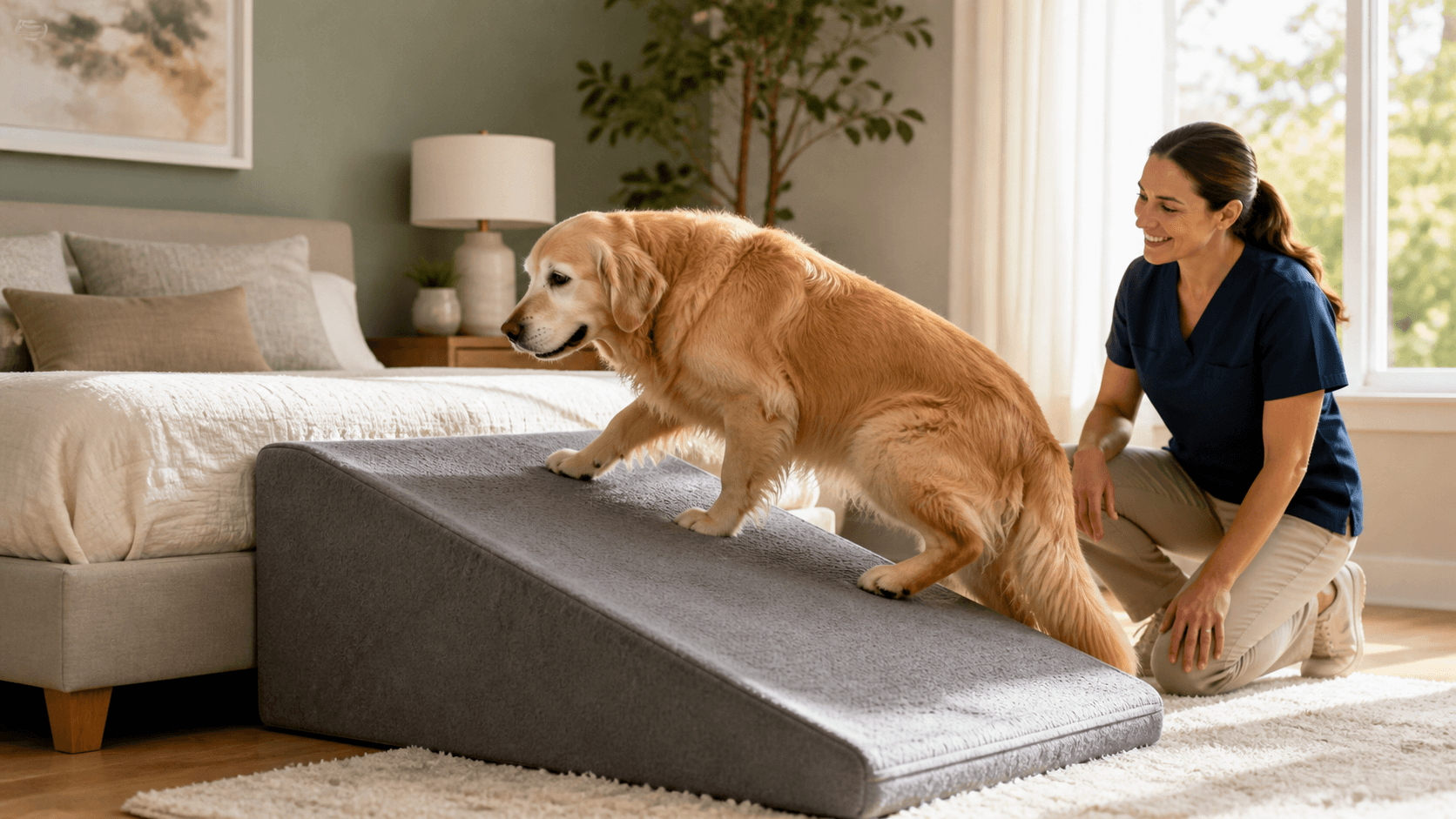
In this stage of life, a senior dog mobility ramp is not about spoiling our pets. It is about giving them a safe, steady path so they can still be with us on the bed or couch without gambling with their health. Instead of pushing them to jump or lifting them all the time, we are giving them a way to stay independent while keeping their aging body protected.
Subtle Signs Your Senior Dog Is Struggling
Most dogs do not suddenly stop jumping overnight. The changes are slow and easy to miss at first. You might notice small things, like:
- Longer pauses before they jump up
- Missed steps when climbing onto furniture
- Reluctance or "thinking about it" at the bottom of stairs
- Pacing, whining, or pawing at the side of the bed
- Avoiding a favorite couch or window seat they once loved
On hot or humid summer days, these signs can be even more obvious. Stiff joints and sore muscles often feel worse in that kind of weather. Conditions like arthritis, hip dysplasia, back pain, and general joint stiffness make every jump harder. As muscle mass slowly fades with age, even simple motions start to look wobbly.
It is easy to shrug and say, "They are just getting old." But those small changes are early warnings. They are your dog's way of saying, "This is getting hard for me." Seeing those signals as a prompt to add a safer way up, like a senior dog mobility ramp, can protect your dog from a bigger injury later.
When a Ramp Shifts From Convenience to Medical Need
For a young, healthy dog, leaping up and down from beds and sofas is usually fine. For an older dog, every jump sends impact up through the paws, into the wrists, elbows, shoulders, spine, hips, and knees. Over time, that pounding can trigger pain flare-ups and swelling, and it raises the chance of a serious fall.
There are clear turning points when a ramp is no longer a "nice extra" but part of a health plan, such as:
- After surgery, especially on joints, back, or hips
- After a new diagnosis of arthritis or hip problems
- When your vet increases pain medications for mobility issues
- When your vet suggests limiting stairs, jumping, or high-impact play
A stable, properly sized senior dog mobility ramp gives dogs a gentle slope instead of a risky leap. That means less strain on sore joints, but still enough movement to keep muscles working. Walking up a ramp uses the body in a smoother, more controlled way. That can help your dog stay active and strong instead of sitting out of family time because jumping hurts too much.
Why Foam Ramps Are Safer for Aging Joints
Not all ramps feel the same under a senior dog's paws. Hard plastic or wood can be slick or sharp on tender joints. Foam ramps give a different kind of support that is often kinder to older bodies.
Premium, furniture-grade foam:
- Absorbs a bit of impact with every step
- Offers gentle traction that is soft but stable
- Has edges that are less likely to bruise if a paw slips
For dogs with arthritis or neurological issues, that softer, more forgiving surface can make them feel much safer. It is like the difference between climbing bare steps or walking on a firm, cushioned mat. The foam can also help prevent that "jarred" feeling when a paw lands harder than expected.
Washable, non-slip covers are another key detail, especially in summer when paws can be a little damp from outdoor walks or rainy days. A gradual incline matched to your bed or couch height keeps the climb from feeling steep or scary. Light, stable foam ramps are also easier to move around the home, so you can adjust as your dog's favorite spots change.
Setting Up Your Home for Safe Senior Dog Access
Setting your home up for your senior dog starts with choosing between a ramp and stairs. In general:
- Ramps are often better for dogs with arthritis, back problems, or very short legs
- Stairs can work for dogs who still lift their legs comfortably and do not struggle with depth perception
- For larger dogs, look for a wider, sturdier surface so they feel secure
Match the ramp or stairs to the height of the places your dog truly uses, like:
- The main family couch or sectional
- The bed where you sleep
- A favorite window seat or chair they watch the world from
Place the ramp on solid flooring, not on top of loose rugs that can slip. Avoid tight corners where your dog has to turn sharply to get on or off. In rooms with slick floors, make sure the base will not slide.
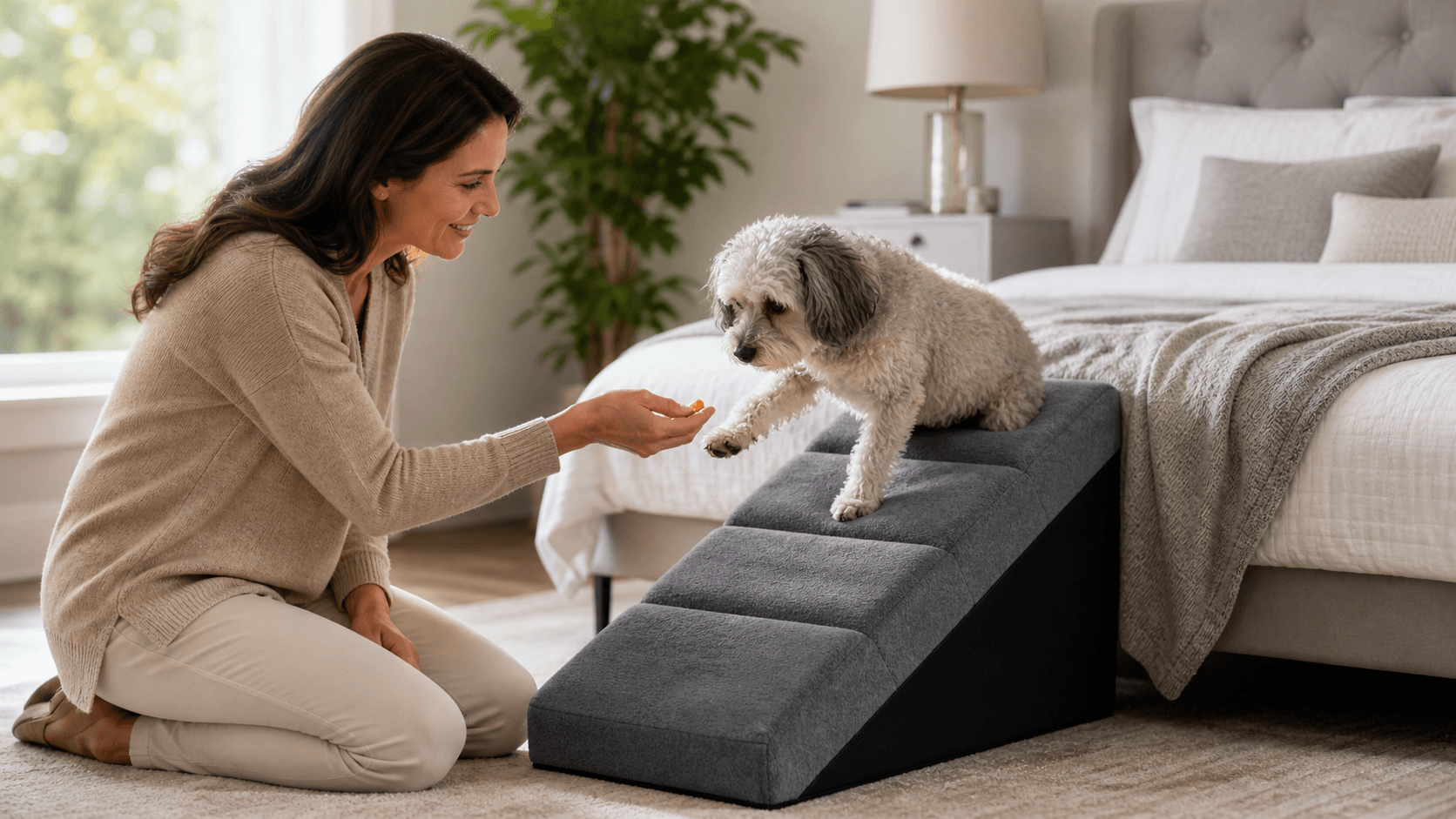
Training a senior dog to trust a ramp takes patience, especially on hot summer days when they may be more tired. Start slow:
- Use treats or a favorite toy to guide them one step at a time
- Keep sessions short so they do not get sore or overwhelmed
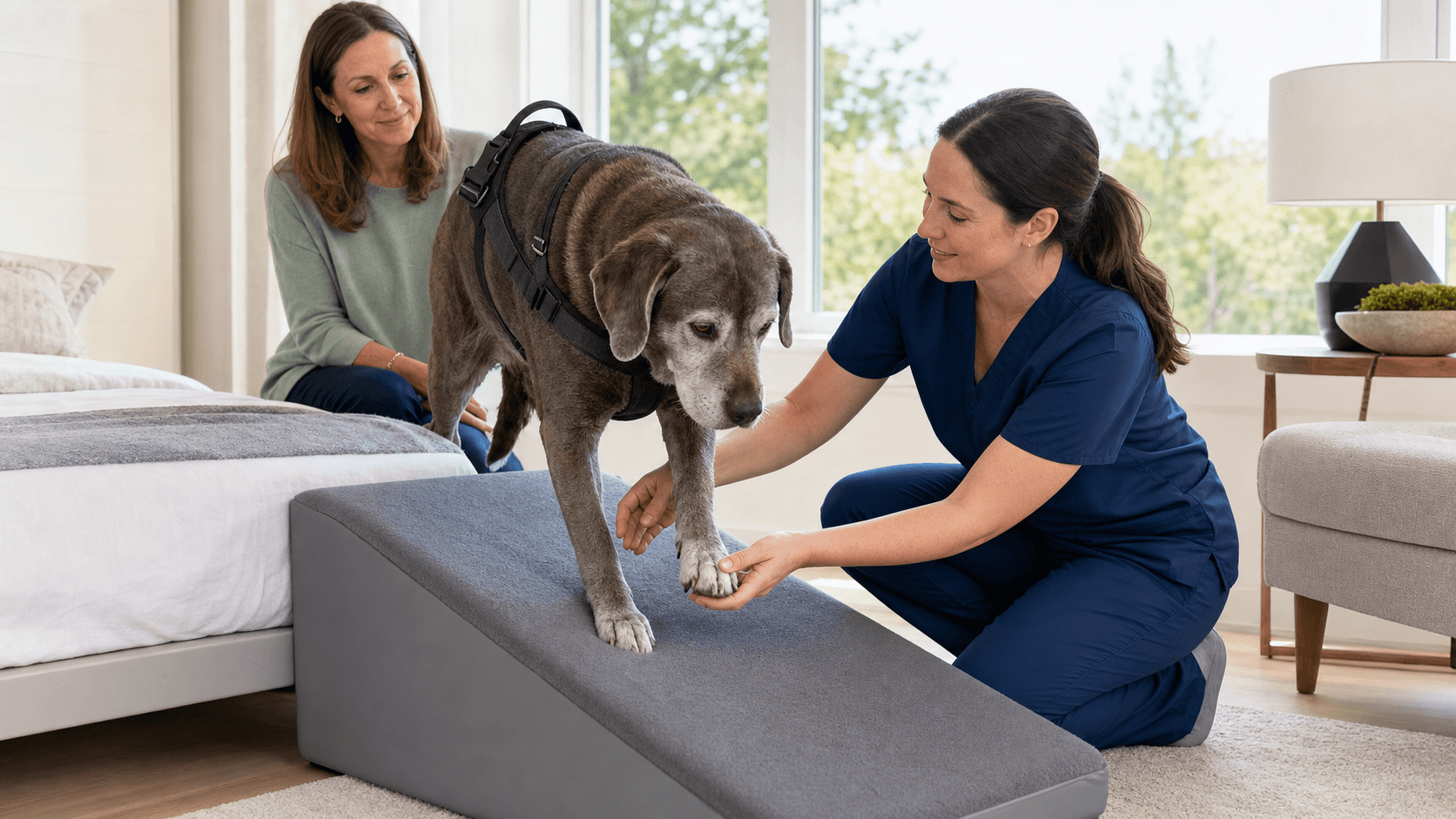
- Stand beside them or use a leash for gentle support
- Praise even tiny progress and let them rest often
Over a few days, most dogs start to see the ramp as their safe path to cuddles.
Give Your Senior Dog a Safer Path Starting Today
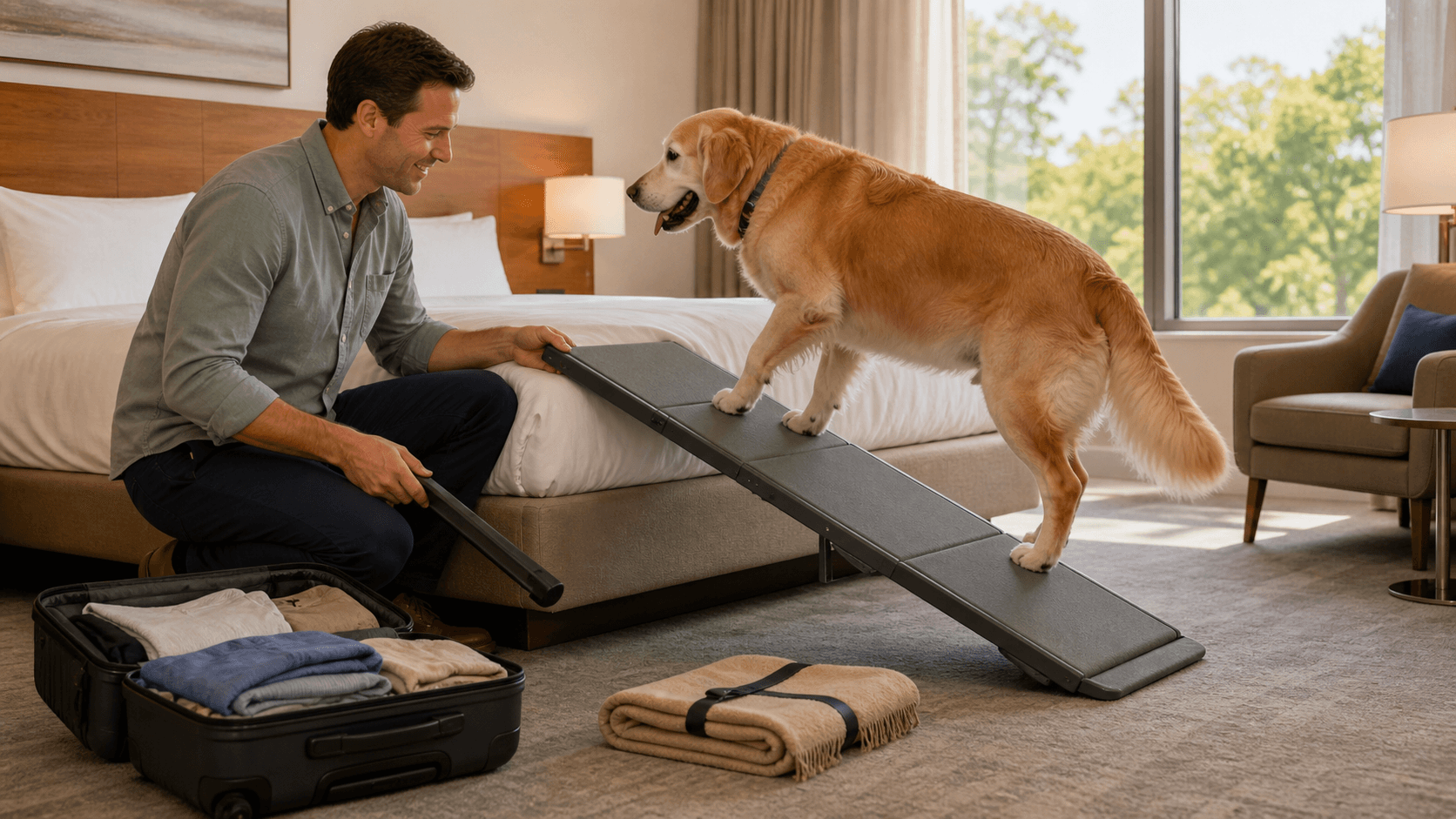
Acting early with a senior dog mobility ramp often means fewer scary slips, fewer painful landings, and more peaceful naps right by your side. Instead of guessing how much their body can handle, you give them a clear, gentle way up and down. That matters at home, on summer road trips, and during holiday visits when new furniture and slick floors can add extra risk.
At Royal Ramps, we design and manufacture premium foam ramps and stairs made in the USA because we want older pets to stay close without hurting themselves. When you look around your home, think about where your senior dog tries to follow you, where they hesitate, and where they have already stopped going. A well-chosen ramp that fits their favorite spots can turn those worried pauses back into confident steps, so you can keep sharing the couch, the bed, and all those quiet evenings together.
Support Your Senior Dog's Comfort And Independence Today
Give your aging companion safer, easier access to beds, couches, and more with a thoughtfully designed senior dog mobility ramp. At Royal Ramps, we craft stable, gentle-incline ramps that help reduce joint strain and daily discomfort for senior pets. If you have questions about sizing, materials, or which ramp best fits your home, reach out through our contact page so we can help you choose the right solution.