Help Your Anxious Pet Feel Safe Using a Ramp Indoors
Helping an anxious pet learn a new skill can feel stressful, especially when it involves something as important as getting on and off furniture safely. When pets are worried or unsure, they may freeze, bark, pace, or cling to us, and that can make training feel hard. A calm, trusted foam dog ramp can change that, giving your pet a safe path to the couch or bed and giving you peace of mind.
As pets get older or deal with joint issues, those everyday jumps onto sofas, beds, and chairs can start to hurt. Indoors is where they spend most of their time, especially in late summer and fall when the days slowly get shorter and we all settle back into home routines. A soft, stable ramp helps protect their joints, lowers the risk of slips and falls, and makes it easier for anxious pets to relax.
In this guide, we will walk through why some pets fear ramps, how to set up the right indoor ramp zone, and simple step-by-step training to build trust. Our focus is on gentle, low-stress methods that help your dog or cat learn to feel safe using a foam dog ramp inside your home, now and as the weather cools.
Why Some Pets Fear Ramps and New Indoor Setups
Even though a ramp is there to help, many anxious pets see it as a strange, scary object at first. There are a few common reasons they may resist stepping on a foam dog ramp.
Some pets are nervous because of past pain or falls. If jumping has hurt them before, they might connect any new way of getting up with that discomfort. Others dislike new textures and shapes and do not know what to think about a big foam piece on the floor. Limited mobility or poor vision can also make it hard to judge where to place their paws, which adds to their stress.
You might notice things like:
- Tucked tail or low, stiff posture
- Lip licking or yawning when they look at the ramp
- Turning their head away or avoiding eye contact
- Hiding behind furniture or moving to another room
Seasonal shifts can make all of this feel even bigger. Back-to-school schedules, less outdoor time, and more hours alone indoors can make anxious pets feel unsettled. When the house suddenly feels different, any new item, including a ramp, may seem threatening.
This is where empathy and patience matter. We never want to force a pet onto the ramp or drag them up it. That can confirm their fear and set training back. Instead, we read their body language, keep sessions short, and move at their pace so they learn that the ramp is safe and they stay in control.
Setting up the Perfect Indoor Foam Dog Ramp Zone
Before training starts, it helps to create a calm, steady spot for the ramp. Location is a big part of how safe your pet will feel.
Pick a place:
- Against furniture your pet already loves, like the sofa, bed, or favorite chair
- Away from busy walkways, so people are not stepping over the ramp
- Off slippery floors, or add a rug underneath for extra grip
- Away from loud appliances like washers, dryers, or noisy fans
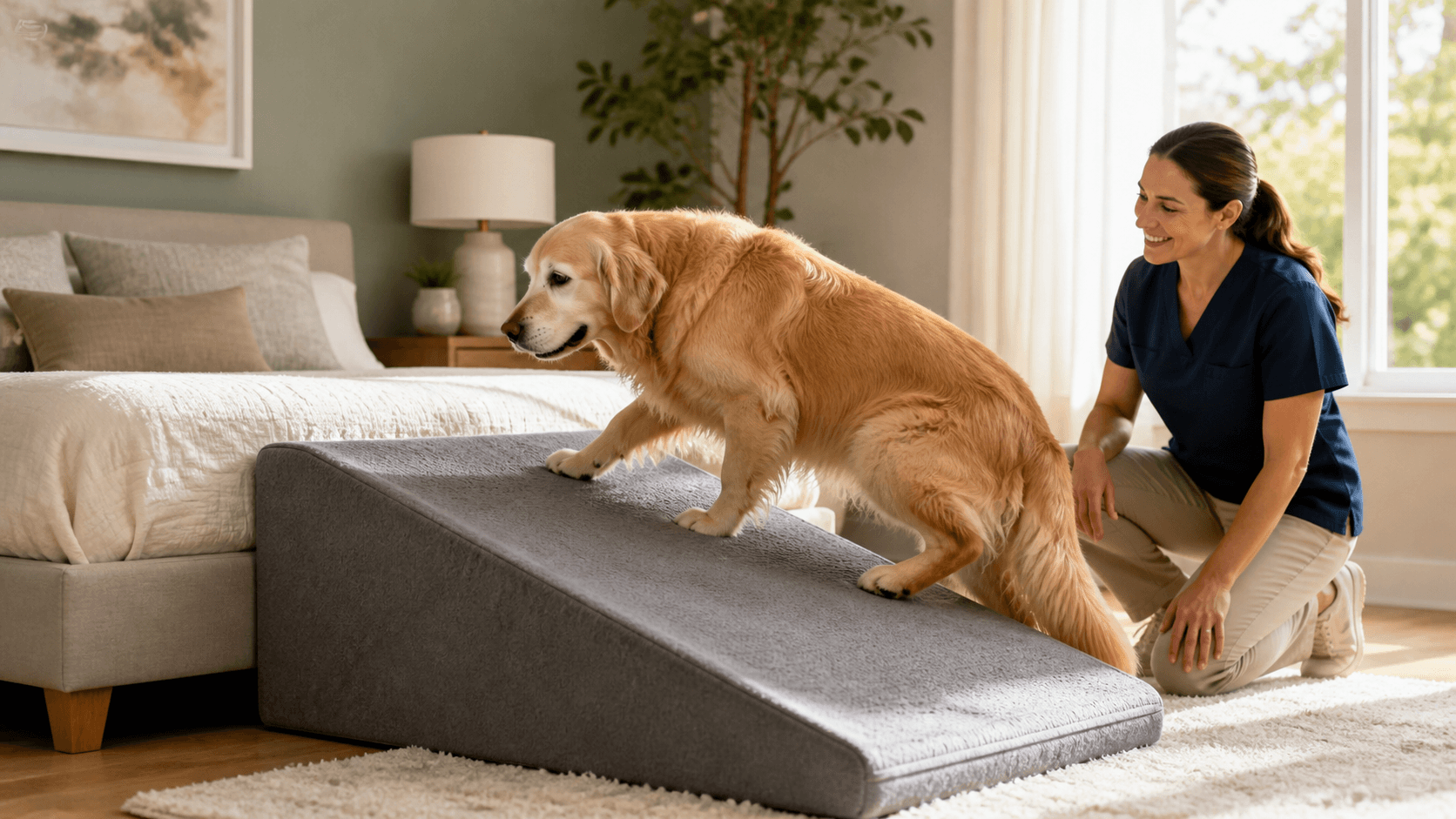
The foam dog ramp should feel solid and normal, not like a wobbly new toy. Press it snugly against the furniture so there are no gaps. Make sure the incline is gentle enough for your pet's size and mobility. For smaller or older pets, a lower, longer ramp is usually more comfortable than a short, steep one.
To make the area feel even more relaxing, try:
- Soft lighting in the evenings, not bright overhead glare
- A nearby bed, mat, or blanket that already smells like you
- Less clutter around the ramp, so your pet has plenty of space to think and move
As late August turns into early fall and windows stay closed more often, fresh air and sound can change indoors. Keeping the ramp area calm and predictable helps your pet feel safe, even as the season shifts outside.
Step by Step Training to Build Ramp Confidence
We like to think of ramp training as teaching your pet that this strange new object is just another piece of normal home life. Slow and steady really works best, especially with anxious pets.
Start with simple desensitization:
- Lay the foam dog ramp flat on the floor, not leading to furniture yet.
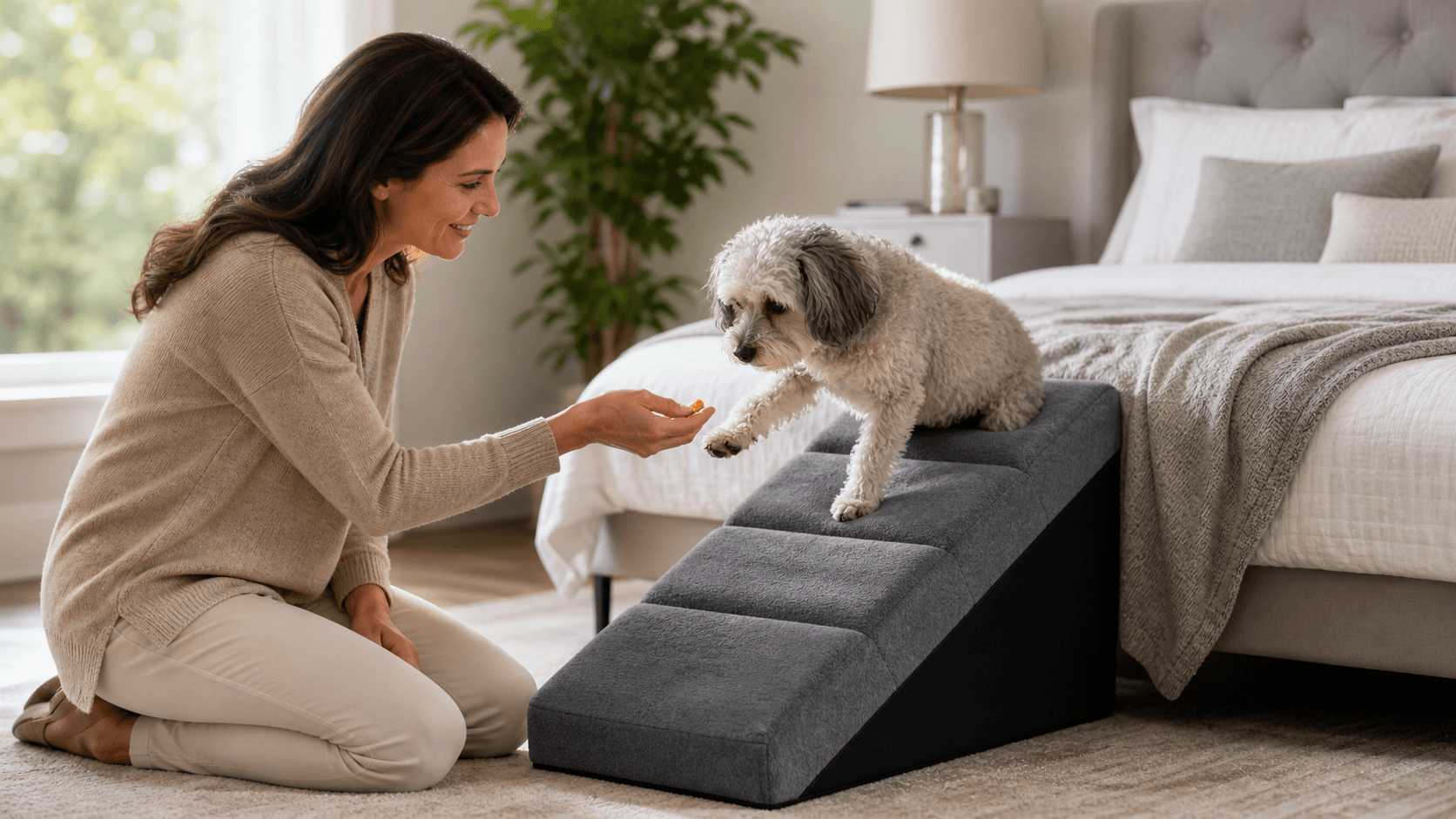
- Reward any calm interest. Approaching, sniffing, or touching the ramp with a paw or nose all earn treats and gentle praise.
- Keep early sessions short, about 3 to 5 minutes, then stop while your pet is still relaxed.
Once your pet is comfortable being around the ramp, gradually build up:
- Step 1: Reward one paw on the ramp, then two paws, then standing fully on it.
- Step 2: Gently encourage walking across the ramp while it is still flat, using high-value treats or a favorite toy.
- Step 3: When your pet moves across it easily, raise one end so it touches the sofa or bed. Keep the height low at first.
- Step 4: Over several sessions, slowly adjust to the final height, giving treats at both the bottom and the top.
End every session on a positive note, even if that means going back to an easier step your pet enjoys. Avoid luring too quickly or pulling on collars or harnesses. Hesitation is normal, not something to punish.
For very anxious pets, try training:
- After a walk or gentle playtime, when they are a bit calmer
- When the house is quiet, not during storms or evening chaos
- In tiny steps, with lots of breaks and praise
The goal is to build trust, not speed. We want your pet to think, "This ramp feels safe," every single time.
Keeping the Ramp a Cozy, Trustworthy Part of Home
Once your pet is using the ramp, the next goal is to keep it a normal, cozy part of daily life. Consistency is your best friend here.
Try to keep the foam dog ramp in the same place so your pet can rely on it, especially as fall evenings get darker earlier and visibility indoors changes. Sudden moves can confuse some pets and bring old worries back.
To make the ramp even more inviting:
- Add a soft, washable cover that feels gentle under their paws
- Place a favorite blanket or small toy near the top landing
- Offer praise and a treat from time to time when they choose the ramp on their own
You can fold the ramp into everyday routines like:
- Morning climbs onto the bed for a quick cuddle
- Afternoon naps on the couch
- Movie nights when everyone gathers in the living room
Watch for the moment your pet starts choosing the ramp instead of trying to jump. That is a big sign that their anxiety is easing and their body is thanking you for the easier path.
Start Your Pet's Low-Stress Ramp Routine Today
Training an anxious pet takes time, but one small step can make a real difference. This week, you might simply place a foam dog ramp near your pet's favorite indoor spot, reward any calm look or sniff, and let it become part of the room.
Over time, those small choices add up. Fewer risky jumps mean less strain on aging joints, fewer slips and scares, and more safe cuddles on beds and sofas as the weather cools and we spend more evenings inside. At Royal Ramps, we design high-density foam dog ramps and washable covers to blend with your home décor while giving your pet a soft, trusted path. With a little patience and a steady routine, your ramp can become one of the coziest, safest spots in your home.
Help Your Dog Move Safely and Comfortably Every Day
Give your pet a gentler way to reach their favorite spots with a high-quality foam dog ramp from Royal Ramps. Our ramps are designed to support your dog's joints, reduce strain, and fit seamlessly into your home. If you have questions about sizing or the best option for your pet, just contact us and we will help you choose the right solution.