Help Your Dog Reach High Beds Safely and Comfortably
Small and senior dogs often want to be right next to us at night, but high beds can turn something simple into a daily struggle. You may see your dog pacing, hesitating at the edge, or whimpering for a boost. That moment is more than just inconvenient; it is your dog telling you that the jump is getting too hard.
At Royal Ramps, we focus on gentle ways to protect your dog's joints while still keeping them close. In this article, we will explain why high beds can be tough on your dog's body, how foam dog ramps for high beds compare to other options, what features actually matter, how to train your dog to use a ramp, and how our foam designs support small and senior pets at home.
Why High Beds Are Hard on Your Dog's Joints
From your dog's point of view, a tall bed is like a mini obstacle course. The higher the frame, box spring, or mattress, the farther your dog has to launch upward, then land with force when jumping back down. That repeated impact loads stress into the front legs, shoulders, back, and hips.
Some dogs are especially at risk, including:
- Small breeds that have to jump a relatively large distance
- Senior dogs whose joints are already wearing down
- Overweight dogs that place extra pressure on every landing
- Dogs with arthritis, hip dysplasia, or past injuries
Over time, all that jumping can contribute to chronic soreness and stiffness. You may notice your dog avoiding certain movements, hesitating before following you to bed, or needing more rest after normal activities. That can lead to more vet visits and less time spent simply relaxing together. Reducing the need to jump from high surfaces is a practical way to protect their comfort and quality of life.
Foam Dog Ramps for High Beds Versus Other Options
Once you see your dog struggling, it is natural to wonder which solution is best. Pet stairs, low platforms, lifting by hand, and foam dog ramps for high beds can all help, but they are not equal in how they treat your dog's body.
Pet stairs break the height into steps, which can work for some dogs, but each step still requires a small jump up and down. For dogs with short legs, sore backs, or limited vision, stepping accurately can be hard. Low platforms shorten the jump but do not fully remove the impact, so joints still take a hit every night.
Lifting your dog by hand might feel caring, but it also means your dog has to wait for you and may wiggle or resist. It can be hard on your own back and shoulders if you are doing it multiple times a day.
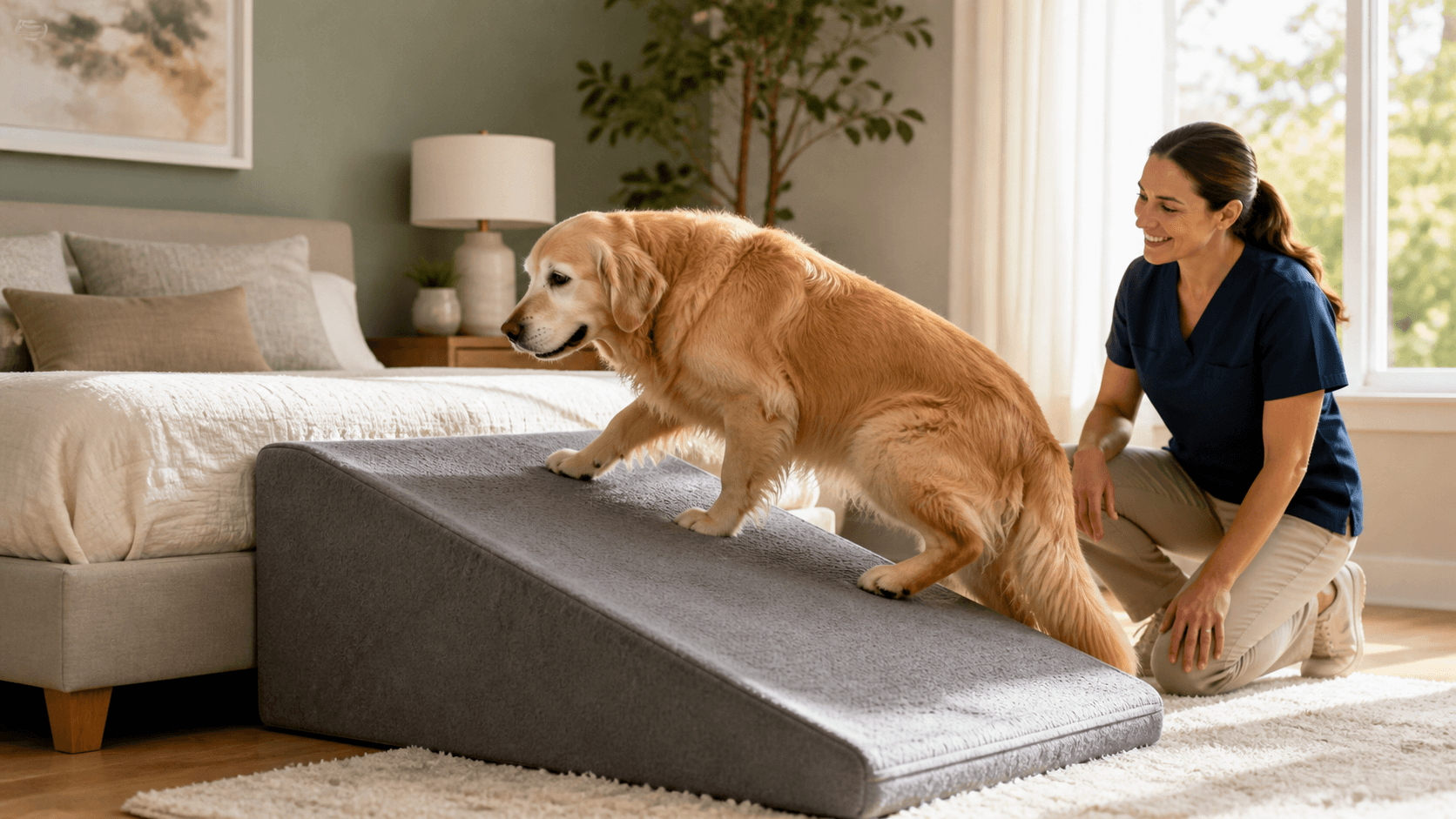
High-quality foam dog ramps for high beds offer a gradual, continuous incline. Instead of jumping, your dog can walk, spreading weight across all four paws. With the right foam, the ramp absorbs some of the impact and supports the body evenly. There are no hard edges or sharp pressure points on paws. When the surface is stable and comfortable, many dogs gain confidence and move more naturally.
Key Features to Look for in Foam Dog Ramps for High Beds
Not all ramps are the same, and matching the ramp to your bed and your dog matters. A few details make a big difference in safety and comfort.
Height and length are the starting point. The ramp should line up with the top of your mattress so there is no big step at the end. A longer ramp usually creates a gentler incline, which is easier on older joints and tiny legs. If your bed is very tall, you will want a ramp designed to reach that height smoothly.
Foam density and support are just as important. High-density, furniture-grade foam helps the ramp stay stable, so it does not sag or wobble under your dog's weight. Softer, low-density foam can compress too much, which may feel unsteady or cause your dog to sink in. The right foam gives a little for comfort but still feels strong underpaw.
Cover material and traction keep your dog from slipping:
- Soft fabric that is gentle on sensitive paws
- A non-slip surface your dog can grip easily
- Removable covers that you can take off and wash
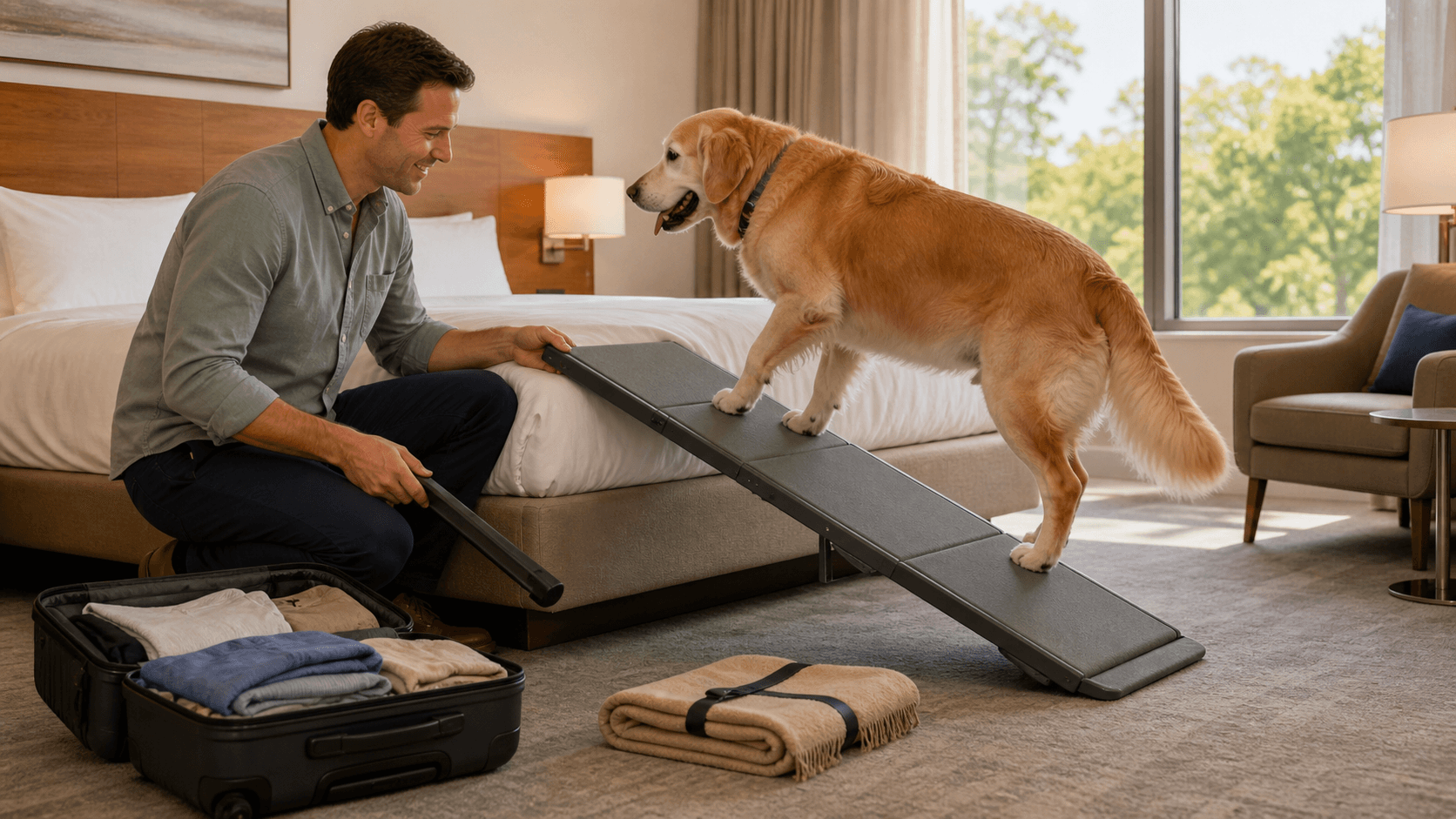
Finally, consider the ramp footprint and design. Measure your space beside the bed. Some bedrooms are better suited to a straight ramp, others to shorter stairs, and some to modular pieces that can be repositioned. A design that fits your room will be used more consistently by both you and your dog.
Teaching Your Dog to Use a Foam Ramp with Confidence
Even a well-designed ramp is new and a little strange at first. Giving your dog time to adjust turns the ramp into a trusted part of their routine instead of something to avoid.
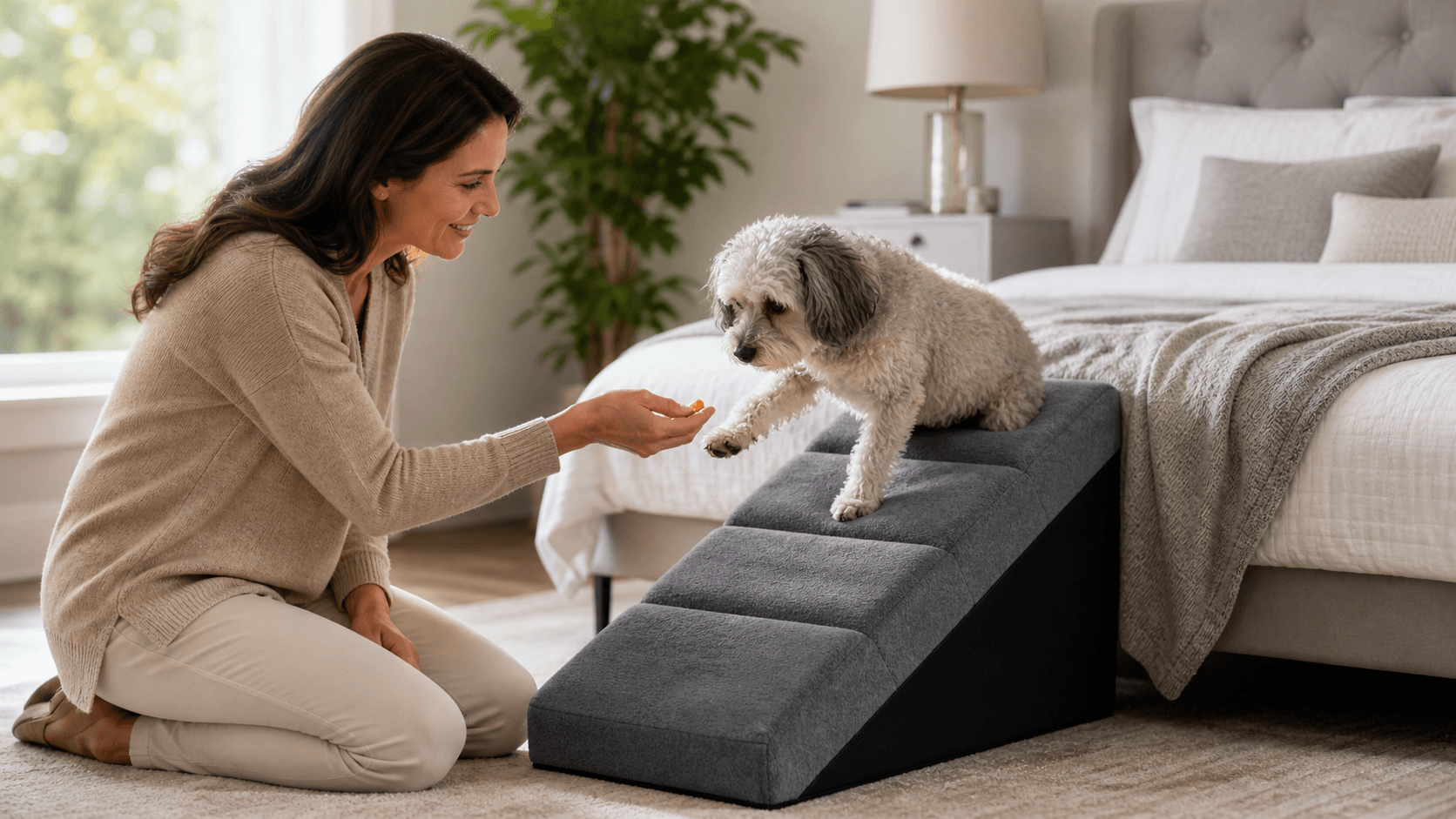
Start with a simple introduction. Place the ramp at a very low angle where it feels easy and secure. Allow your dog to sniff and explore without pressure. Reward any curiosity, such as stepping one paw on the ramp or standing near it.
Positive reinforcement is the key. You can:
- Use small treats to lure your dog slowly up and down
- Offer calm, encouraging praise every time they try
- Keep early sessions short and end on a success
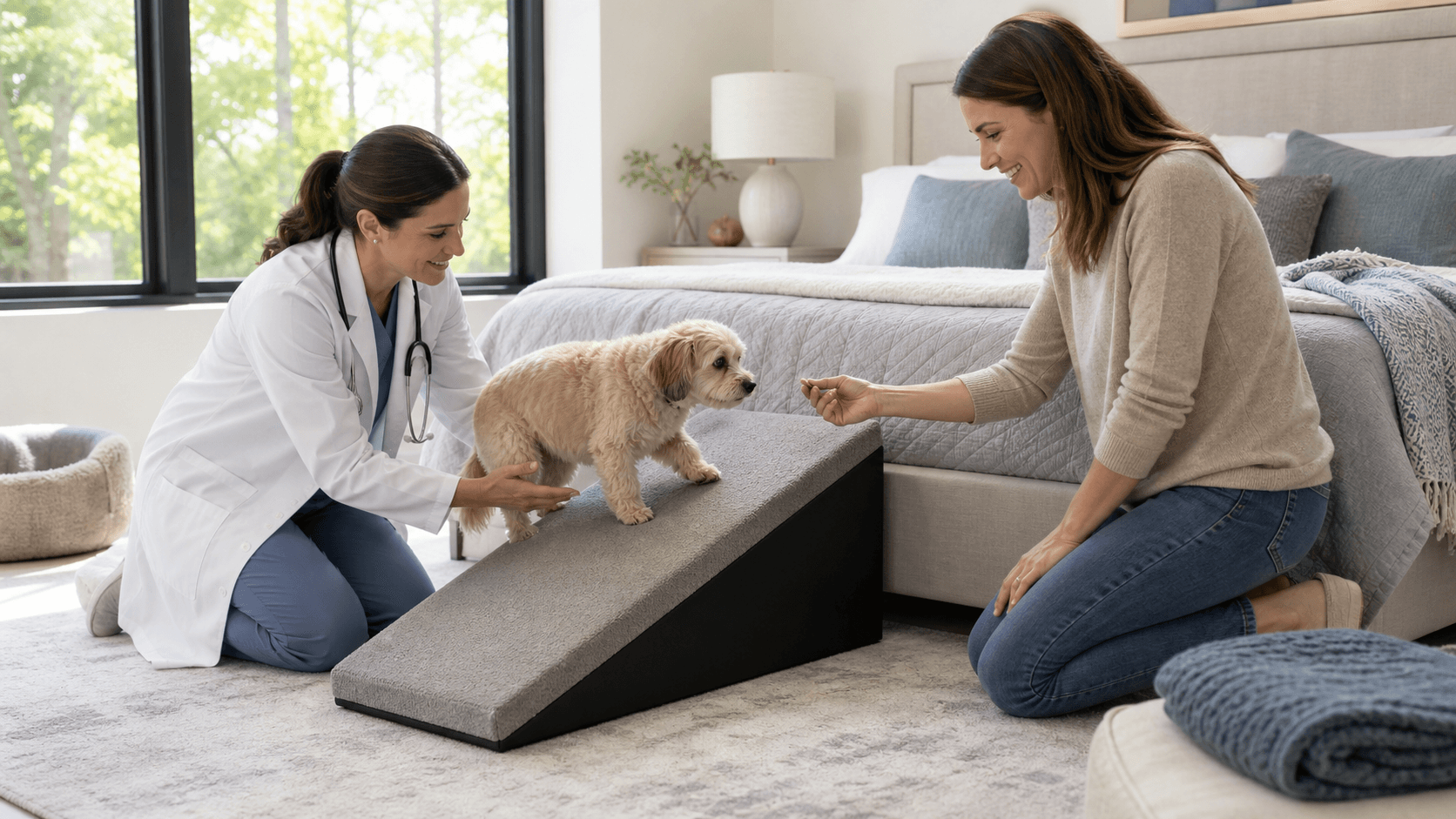
Supervise closely in the beginning and never rush or force your dog. Make sure the ramp is flush and stable against the bed before each use, and check that the floor under the ramp is not slippery. With patience, most dogs learn that the ramp is the easiest path to their favorite spot.
How Royal Ramps Protects Your Dog's Mobility at Home
At Royal Ramps, we focus on foam dog ramps for high beds and related products that support dogs with joint and mobility challenges. Our products are designed with small breeds and senior pets in mind, so they can still enjoy everyday activities like sleeping in bed with their people.
We use premium foam intended for furniture, which helps create a balance of comfort and stability. Our ramps and stairs are built to offer sturdy internal support while staying lightweight enough to move as needed around your home. Each piece includes a removable, washable cover so you can keep the surface fresh and clean.
The designs are meant to blend in with your space, not stand out as medical equipment. Whether you are helping a tiny dog reach a tall bed, giving a recovering pet a safe way to avoid jumping, or supporting an aging companion who still loves snuggling close, the goal is the same. We want to make it easier for your dog to move comfortably around your home and stay by your side.
Make Bedtime Easier and Safer for Your Dog
When we reduce the need for our dogs to jump from high beds, we lower stress on their joints, decrease the chance of slips or hard landings, and give them more independence. Foam dog ramps for high beds make it simpler for your dog to get on and off the bed whenever they choose, which keeps your nighttime routine relaxed and connected.
It helps to take a moment and really look at your current setup. How tall is your bed, and how does your dog handle it now? If there is hesitation, struggle, or obvious discomfort, a foam ramp may be less a luxury and more a practical part of caring for their long-term mobility. With the right ramp, a thoughtful setup, and a gentle training routine, you can turn your bed into a safe, accessible place your dog happily reaches on their own.
Help Your Dog Reach High Beds Safely and Comfortably
Give your pup easy, stress-free access to your high bed with our thoughtfully designed Dog ramps for high beds. At Royal Ramps, we design each ramp with stability, gentle angles, and soft yet supportive materials to protect joints and boost confidence. Explore our options to find the right fit for your home and your dog's needs. If you have questions or need guidance, please contact us and we will be happy to help.